The AI FOMO Trap: Why Chasing Every New Model is Quietly Killing Enterprise Efficiency
Enter Uplizd: Own Your Infrastructure, Banishe FOMO

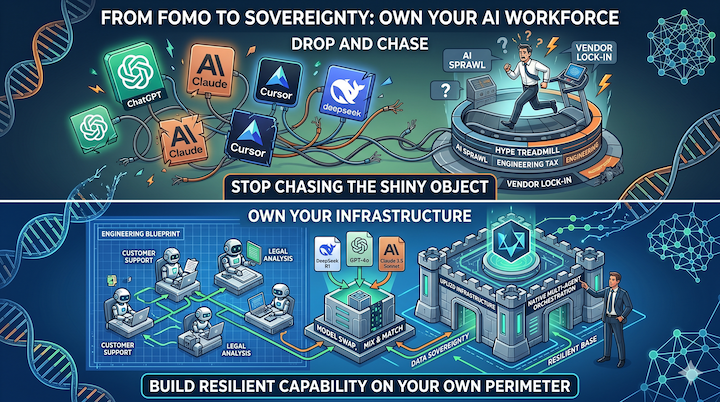
It feels like a lifetime ago, but it was only a few years back when ChatGPT took the world by storm. Suddenly, every executive suite in the world was gripped by a single, terrifying question: Are we lagging behind on AI?
Since then, the pace hasn’t just stayed fast; it has become dizzying. We watched the industry rally around OpenAI, only to have Anthropic drop Claude and push the boundaries of reasoning. Then Cursor changed how we write code, and more recently, DeepSeek disrupted the entire economic equation of running intelligence at scale.
Every few months, a new model drops, the internet explodes with benchmarks, and a fresh wave of FOMO (Fear of Missing Out) hits.
But for businesses trying to build real, load-bearing software, this cycle introduces a stressful reality: Every time something exciting comes along, do we throw away our old tech stack and chase the new shiny object?
The Hidden Cost of the "Drop and Chase" Cycle
For an individual developer or hobbyist, swapping out an API key to try a hot new model takes five minutes. For an enterprise, it’s an absolute nightmare.
When a business integrates a specific AI model deeply into its operations—whether for automated customer support, supply chain logistics, or legal document analysis—that model becomes part of their infrastructure. It is tied to specific prompts, custom data pipelines, guardrails, and compliance workflows.
Unchecked AI sprawl and the constant urge to pivot create massive corporate vulnerabilities:
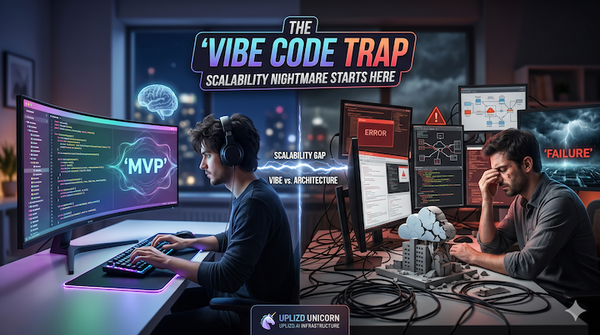
- The Engineering Tax: Rewriting code, retraining middleware, and re-testing system prompts every time a new model tops the leaderboard drains engineering hours that should be spent on core product features.
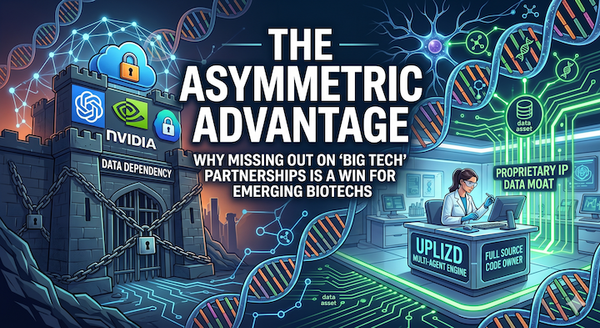
- Operational Instability: Relying entirely on a single closed-weight provider means you outsource your operational destiny. If that provider updates their API, changes their pricing, or updates their acceptable use policy overnight, your business workflows can freeze mid-execution.
- The Integration Abyss: Point solutions and isolated AI pilots rarely scale. True enterprise value comes from deep systemic integration, which is impossible to achieve if the foundational layer is constantly shifting beneath your feet.
Chasing the hype cycle isn't a strategy; it's an expensive treadmill. If your AI strategy forces you to choose between vendor lock-in and constant infrastructure rebuilds, it isn’t sustainable.
Enter Uplizd: Own Your Infrastructure, Banishe FOMO
The solution isn't to stop using new AI models. The solution is to change how you host and orchestrate them.
This is exactly why we built Uplizd. Instead of forcing you to build your business on top of a single third-party ecosystem, Uplizd provides the unified infrastructure that lets you build, host, and fully own your AI workers and multi-agent applications.
Think of it as decoupled architecture for the artificial intelligence era.
By decoupling the underlying AI models from the application logic and data perimeters, Uplizd fundamentally shifts the power dynamic back to your business:
1. Total Model Agnosticism
With Uplizd, you are no longer tied to a single vendor's API or terms of service. When a model like DeepSeek slashes token costs, or Anthropic releases a massive leap in reasoning capabilities, you don’t need to rewrite your enterprise application. You simply swap, mix, or match the models powering your AI workers behind the scenes.
2. True Infrastructure Ownership
Your data, your prompts, and your agent workflows stay entirely within your perimeter. By owning the infrastructure layer, you eliminate the risk of a commercial provider unilaterally cutting off your access or shifting their policies in a way that damages your customer service level agreements (SLAs).
3. Native Multi-Agent Orchestration
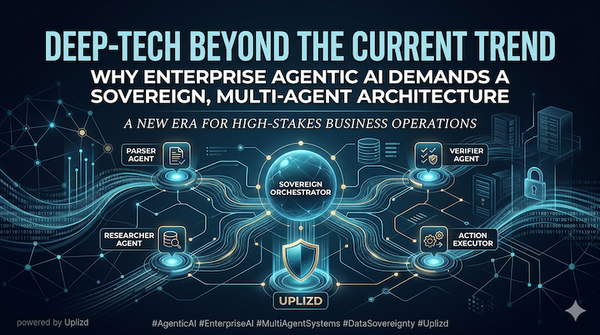
The future of business automation isn't a single chatbot box; it's a network of specialized AI workers handling complex, end-to-end operational tasks. Uplizd is architected from day one to deploy and manage these multi-agent workflows reliably, providing the structured governance and policy enforcement that enterprises need.
From Experimentation to True Sovereignty
The era of being impressed by raw AI capability is winding down; 2026 is the year of execution, integration, and data sovereignty. The businesses that win won't be the ones that constantly scramble to rewrite their products around the newest tech trend.
The winners will be the businesses that build a resilient, flexible foundational capability—an infrastructure that treats AI models as interchangeable components rather than permanent masters.
Stop chasing the hype. Build your AI workforce on infrastructure you actually own.